This is part 3 of a series on Tolkien’s Letter 131, most of which is included in the preface materials of The Silmarillion. Begin reading at Part 1 — or visit the previous post in this series.
* * *
In Part 2 of this series, we looked at Tolkien’s claim that all his writing was about the Fall, Mortality, and the Machine. Having moved on from outlining the big themes of his work, Tolkien then began at the beginning, talking about Ilúvatar, the Ainur, and the creation of the world. But now his letter comes to the Elves, and in so doing he returns to his three themes, most especially the Fall, as in it is wrapped up the other two.

"The Oath of Fëanor" by Ted NasmithHe writes: There cannot be any ‘story’ without a fall—all stories are ultimately about the fall—at least not for human minds as we know them and have them.
Firstly and to get the obvious out of the way, there is a distinction between “fall” and “the Fall,” the latter referring to the narratives in Genesis—for Western Christians, especially, that of Chapter 3: Adam and Eve—but there is a sense in which “the Fall” is the type or pattern for all “falls.” This lower-case “fall” is what Tolkien is talking about here. All stories have a “fall” (I’ll discuss what I think that means in a moment), and all falls are wrapped up in and resultant of “the Fall,” the Big One at the beginning of it all. So all of our stories, Tolkien says, are about falls, but falls from what?
One way to approach this is through the classical frames of tragedy and comedy. Tragedy begins high and ends low; comedy begins lows and ends high. But “high” is meant that the characters are in a good and happy place in their lives (paradise, symbolically); by low, that things are not going well (exile/hell).
This is not always strictly speaking true, but it gives us a sense of what Tolkien is talking about. A “fall” is to tumble from a state of fortune to misfortune—and that means that a comedy begins after the fall, whereas tragedy begins before the fall. Comedy is about recovering from a fall; tragedy is about showing the fall happen.
Tolkien writes: So, proceeding, the Elves have a fall, before the ‘history’ can become storial. (The first fall of Man, for reasons explained, nowhere appears—Men do not come on the stage until all that is long past[…].)
I will discuss the appearance of Man in the next post of this series, but here it is simply worth saying that The Silmarillion is not about Mankind. It is a story about Elves, and so it is with the fall of Elves that it is concerned. [For interested readers, the dialogue between Finrod and Andreth called Athrabeth, available in Morgoth’s Ring gives some hints at the fall of Man.]
Rather, it is this idea that a fall is necessary for history to become storial that intrigues me. In The Lord of the Rings, Sam says that nobody tells stories about times of peace—or, at least, no great tales are about times of peace. It is the times of woe that make for good stories. Stories require conflict, and states of paradise are defined precisely by their lack of conflict. The Scriptures spend one chapter on Paradise and thousands of pages on the results of the Fall from that Paradise. Even tragedies, which are stories about the fall of a character, spend very little time on the “high state” before things start to go bad; and comedies, which are about recovering happiness (paradise), are mostly about the struggle to get there, only showing briefly at the end what that happy state is like.
In a similar vein, it is noteworthy that in Ainulindalë, Melkor “falls” almost as soon as the “story” begins. There is no real story without it. So, The Silmarillion is concerned with the fall of the Elves—an idea that is strange to contemplate if all one knows are the Elves of The Hobbit and The Lord of the Rings, who seem almost angelic in their manners (the Wood-elves of Mirkwood excepted).
So what is the fall of the Elves? The main body of the tale […] is about the fall of the most gifted kindred of the Elves, their exile from Valinor […], their re-entry into Middle-earth.
Explaining further, Tolkien says, the chief artificer of the Elves (Fëanor) had imprisoned the Light of Valinor in the three supreme jewels, the Silmarilli, before the Trees were sullied or slain. This Light thus lived thereafter only in these gems. The fall of the Elves comes about through the possessive attitude of Fëanor and his seven sons to these gems.

"The Killing of the Trees" by John HoweTwo thoughts come to mind here: (1) It is through one Elf (Fëanor) that the “most gifted kindred” of the Elves fall; (2) it is through possessiveness that they fall. Let’s unpack:
(1) This is all rather steeped in Christian theology, and Tolkien is seeking to understand (and answer) the problem of the Fall, and how one man’s sin can affect an entire race. Note, also, that Fëanor does not exist, like Adam and Eve, alone of all his race; his fall comes after and age of peace when many hundred or thousands of Elves have journeyed to Valinor (Paradise). But Fëanor’s fall impacts all the Elves of Valinor and Middle-earth, though that impact is different for different groups. Tolkien’s elven “theology” is rather Patristic in that this fall affects all, though nobody aside from Fëanor and his sons bare the blame or guilt directly for that fall. This is not a tale of original sin though it is, nonetheless, a tale of sin and the fall.
(2) Falls come in many varieties, and they are motivated by as many different things as the people who fall. Adam and Eve’s fall was grasping at something that was not yet for them (Knowledge of Good and Evil). Fëanor’s fall is through possessively grasping something that should have been shared. The results are equally catastrophic. As an allegorical application, we can see that just about any negative/sinful/evil act can create a fall for us that has consequences on ourselves and those around us.
* * *
There are a few other interesting nuggets in this section of Tolkien’s letter that I am skipping over as they do not pertain to this idea of the fall. Here I will offer a couple of quotes with a short comment, and will return to some of these in succeeding parts of this series.
(1) Since the point of view of the whole cycle is the Elvish, mortality is not explained mythically: it is a mystery of God of which no more is known than that ‘what God has purposed for Men is hidden’. It is easy to lose sight of the fact that The Silmarillion is not objective history but Elvish myth. What the Elves do not know or have not speculated on does not enter into that story. They know nothing other than that Men are mortal whereas Elves are not. The Silmarillion speculates that this is as a result of “gifts” from Ilúvatar, but that is Elvish perspective. It is not, therefore, true that Tolkien is suggesting that mortality is a “good thing.” Only that from the perspective of the Elves, who are immortal and trapped within the earth, that mortality seems like a “gift.” It is actually a case of Tolkien himself speculating on how immortality in a fallen world might make us look for and long for death. The loss of a framing narrative in Christopher Tolkien’s final edits of The Silmarillion does a lot of damage to remembering that the stories are subjective rather than objective in perspective.
(2) These tales are ‘new’, they are not directly derived from other myths and legends, but they must inevitably contain a large measure of ancient wide-spread motives or elements. I don’t know how Tolkien can say this with a straight face when something like the tale of Turin exists, so obviously derived from the stories of Kullervo and the Volsungs. Is Turin’s tale derivative? Yes, though in the higher sense of drawing inspiration and influence from rather than being a mere copy beat-for-beat. But it and many other tales in The Silmarillion have very clear analogues to world mythology. Unless I am missing something in what Tolkien means at this point in his letter, I think this is a point where he is not being honest in the most straightforward way.
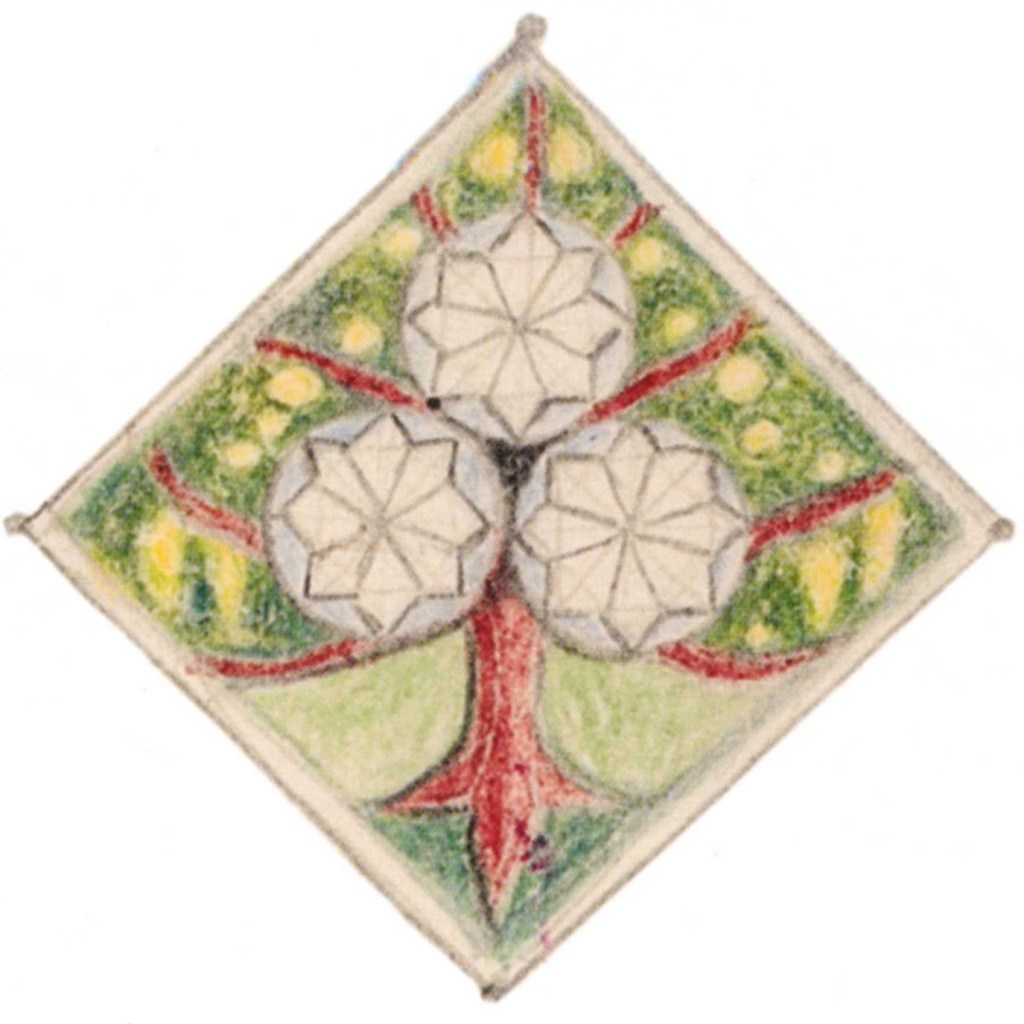
"Silmarils heraldic device" by J.R.R Tolkien(3) A marked difference here between these legends and most others is that the Sun is not a divine symbol, but a second-best thing, and the ‘light of the Sun’ (the world under the sun) become terms for a fallen world, and a dislocated imperfect vision. Again, this is best understood from the Elven perspective, who knew the world when it was lit only by starlight and who saw the Light of the Trees of Valinor. For Man, the Sun is all they knew, for they awoke only after the Sun was set in the heavens. Thus, while it is true that the Sun is a second-best thing and not the original, this is only true for Elves and not for Men—and it is from Men (our world mythologies) that we get the idea that the Sun is a divine symbol.
For new and old readers of The Silmarillion, one of the most difficult things to keep in mind is that the stories are Elvish myths from an Elvish perspective. It is a story about their fall, and about their history. Tolkien’s plan had been that these would be stories recorded by Bilbo in Rivendell during his long retirement. That Christopher Tolkien stripped that frame narrative away is as regrettable as it is understandable—it would have required creative work on his part to fill in all the missing sections. Nevertheless, keeping in mind that The Silmarillion are tales as Bilbo heard them from the Elves is helpful in keeping that narrow perspective grounded when reading.
* * *
Continue reading in Part 5.
 Something Tookish
Leave a comment